
Bravery: A Force that Precedes Change
This post is part of a series devoted to exploring the Values behind UNIVERSE WITHIN, and in this one we focus on Bravery.
Today we’ll explore what bravery makes possible—how it alchemizes new outcomes and helps us transcend old stories.
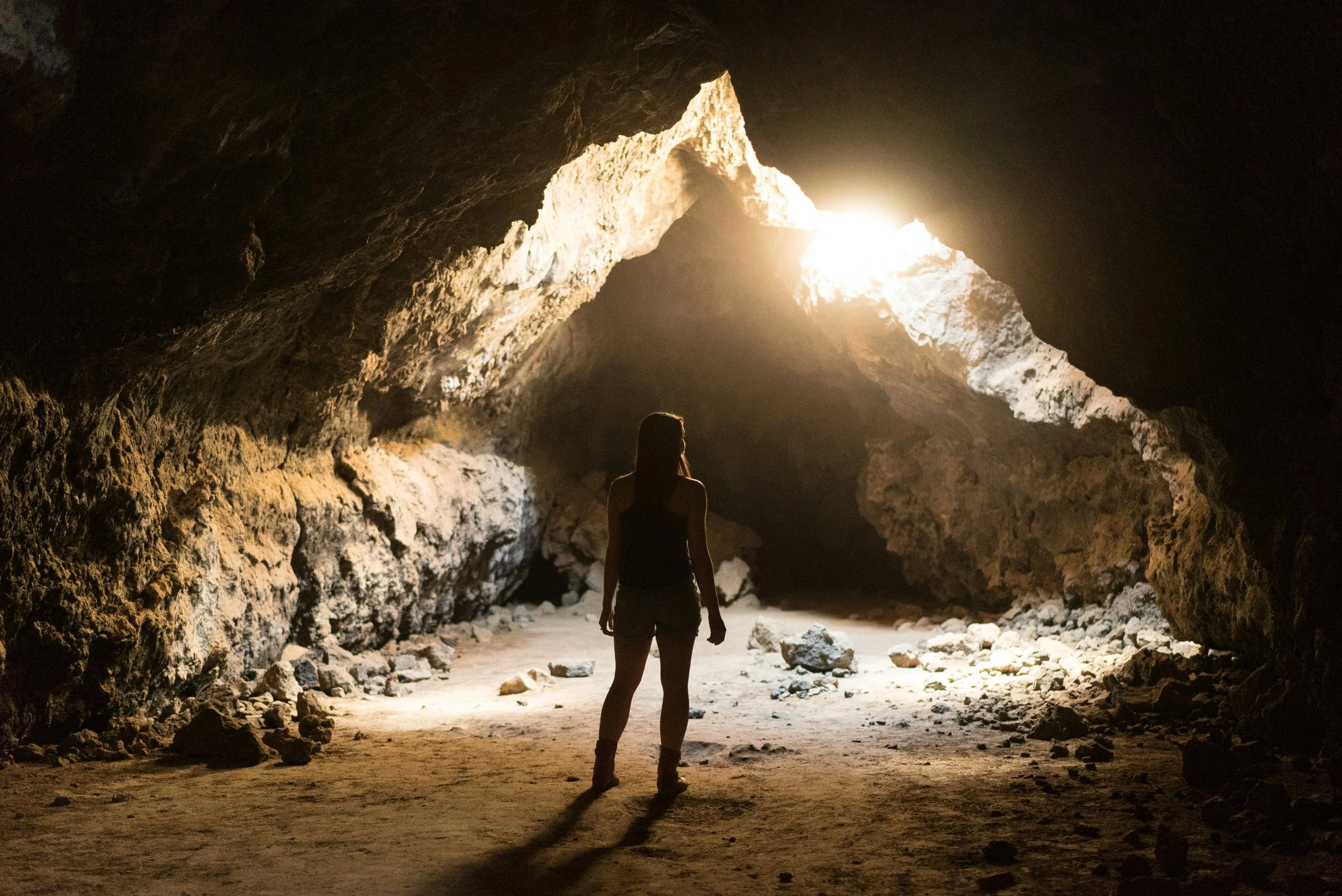
Photo by Joshua Sortino on Unsplash
Bravery asks us to meet fears, feel our vulnerability, and take risks despite them.
To discuss bravery, we must recognize we are also in the realm of fear and vulnerability.
From a starting point in which fears are live and often warranted, and vulnerability is felt (perhaps inescapably so!), we know we will be assuming some new level of risk if we decide to take action. This risk might be interpersonal, financial, physical, emotional, or a combination of these—and it’s asking us to rise to meet a completely novel situation or to meet a familiar situation in a new way.
We don’t talk enough about the inherent risk in things staying exactly as they are.
For without something worth risking, there would never be true motivation or a propelling force to generate a new reality. The current reality may not be working, something about it feeling stuck, stagnant or out of sync with your values in some way.
To tap into the energy of bravery, we must run new experiments, take new chances, make brave new moves. Something new, again and again: that's the texture of bravery. The creative potential that bravery makes possible can at times land us in places where we create a new normal. The old reality can’t possibly continue to exist.
“We can rise up from our failures, screwups and falls, but we can never go back to where we stood before we were brave or before we fell. Courage transforms the emotional structure of our being.” —Brené Brown, Rising Strong
Bravery gives us the opportunity to know ourselves more deeply.
To act courageously holds the potential to change us, sparking new levels of capacity. The concept of “having tea with your demons” was introduced to me by artist Yumi Sakugawa as part of her Illustrated Guide to Becoming One with the Universe. This was before I delved into Somatic Experiencing training and learned specific techniques for meeting challenging emotions and limiting beliefs.
When we can notice, and not run from, the challenging emotion or belief that’s surfacing (aka “demon”), and metaphorically invite it to sit with us for a bit as if we were sharing some tea, we create the opportunity to learn something new. If we become curious about it—rather than outright resisting it—we could understand its reason for existing and what it’s trying to protect us from. Most demons, after all, are just hurt parts of ourselves in disguise. Richard Schwartz created the Internal Family Systems framework based on trying to understand and integrate the many parts within us.
Sometimes we find our “no” or “not this” before we find our way.
In fact, usually it happens that way. We’re all inspiration, no action plan. And don’t we wish a blueprint for getting unstuck would just fall from the sky in those moments?
Joseph Campbell noticed something similar in the arc of the hero's journey. Before the real adventure begins, there's almost always a refusal of the call—a moment where the hero hesitates, resists, or turns away, unsure they're ready or even willing. That refusal isn't a detour from the story; it's part of the story. The "no" tends to come first, and the "yes" has to be earned.
So maybe our own resistance—our "not this," our stalling, our not-yet—isn't proof that we're failing at bravery. It may be the threshold itself. There’s no one-size-fits-all formula for crossing it, and that’s the inconvenient beauty of it. Each of us enters into our own creative problem solving challenge, unique to our innate gifts, our context, our limitations, and our support system.
Bravery isn’t only a choice, it’s a capacity—one that can build with practice.
As a Somatic Experiencing Practitioner, I've come to understand courage as something the nervous system does, not only something the mind decides. We tend to picture bravery as a single heroic leap—one big, white-knuckled moment where we override our fear. But in the body, real and lasting bravery usually looks subtler, and far more gradual, than that.
We each have what Dan Siegel named a "window of tolerance," a zone where our nervous systems are activated enough to feel and grow, but not so flooded that we shut down, panic, or freeze. Bravery lives at the edges of that window. And here's the hopeful part: the window isn't fixed. With practice, it widens. What once felt like too much can, over time, become something we're able to stay present with.
Two rhythms from Somatic Experiencing make this possible. The first is titration: meeting what frightens us in small, manageable amounts rather than all at once. We can touch the edge of a difficult feeling briefly, let it settle, and notice that we're still here. The second is pendulation: the natural swing between touching something hard and returning to something steady and resourced. We contact the edge, then come back to safety. Contact, and return. It's this gentle oscillation, repeated over time, that grows our capacity to be brave.
Peter Levine, who developed Somatic Experiencing, understood that the nervous system heals through rhythm rather than force. This changes our understanding of what bravery asks of us. It's not that we summon enough willpower to conquer fear in one go. It's that we build—gradually and responsively—a system that can hold more than it could before.
The name of my healing arts practice UNIVERSE WITHIN speaks to the bravery sourced deep inside us—the impulse so often drowned out by fear, yet able to activate under the right conditions. When we turn toward what we've been avoiding, we discover an inner world more expansive, and more capable of meeting the moment, than we realized.
